

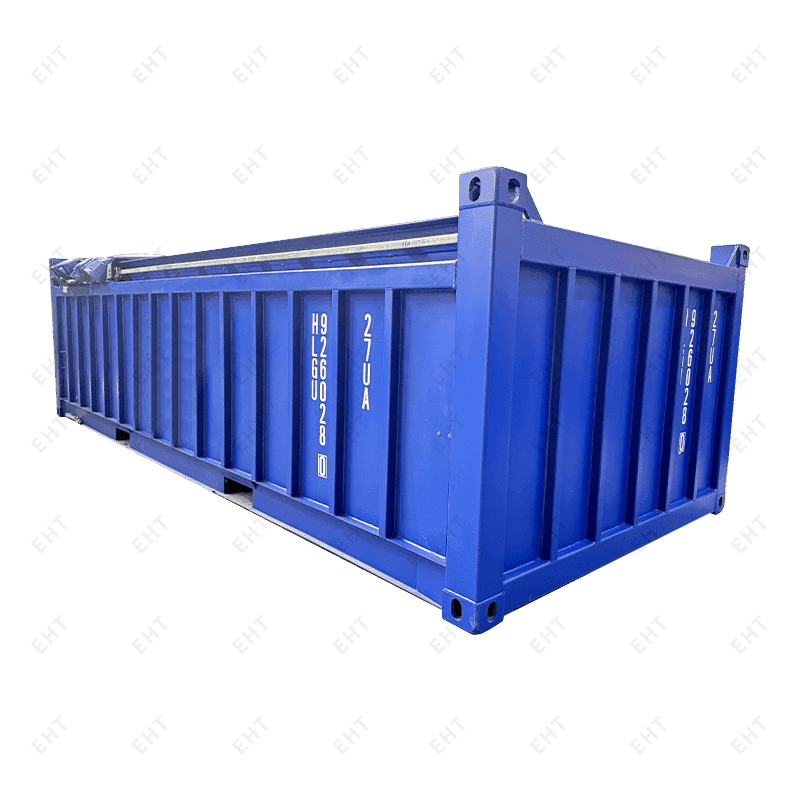
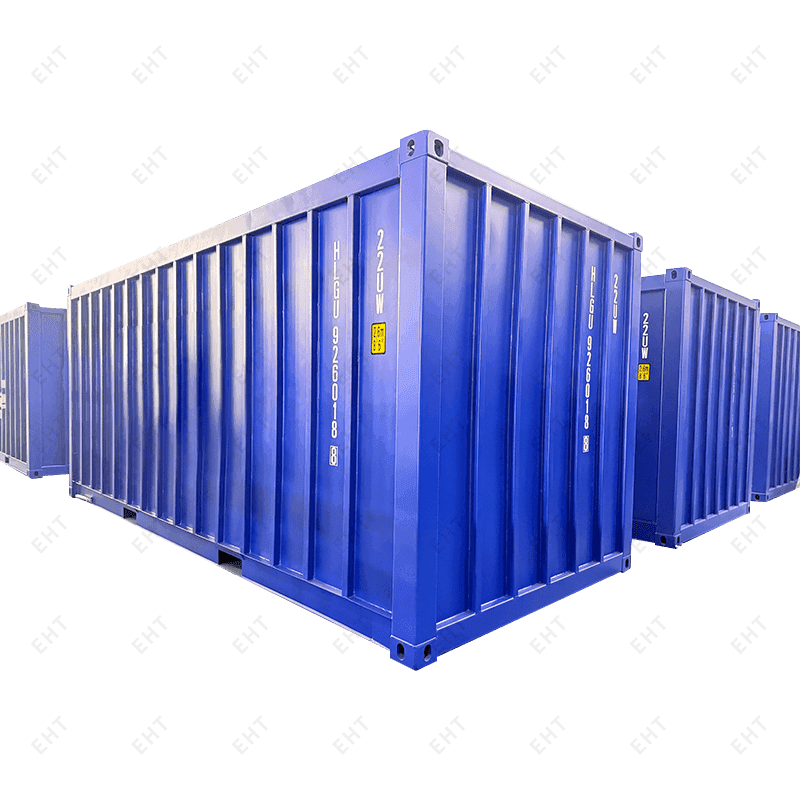
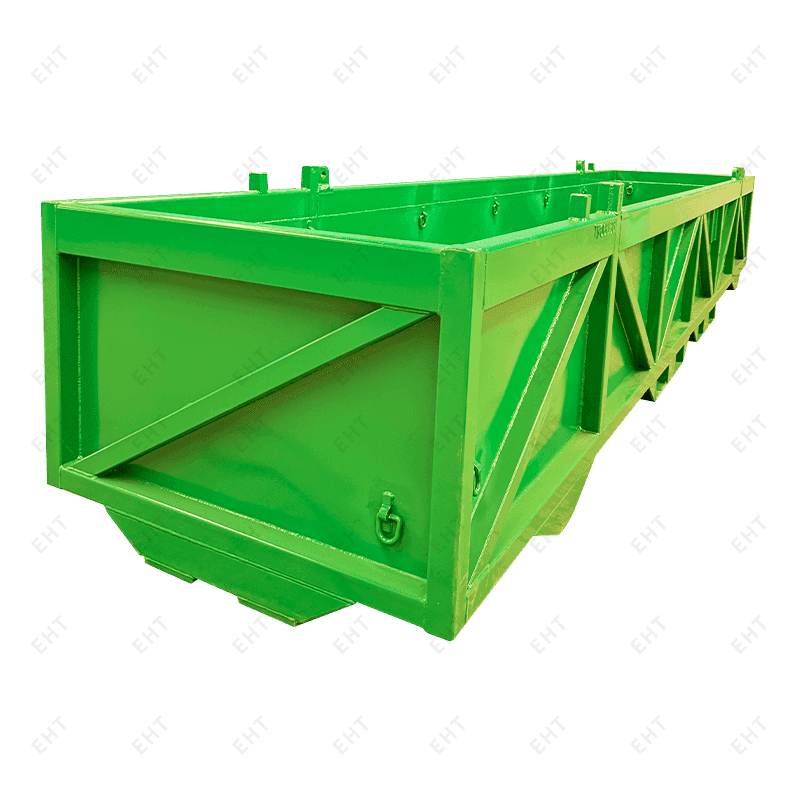
Conteneur pour vrac demi-hauteur à couvercle coulissant de 20 pieds
Le conteneur pour vrac demi-hauteur à couvercle coulissant de 20 pieds est un conteneur spécialisé conçu pour le...
Ask ten system integrators how long lithium batteries last, and you will get ten different estimates. That is not because the industry is confused; it is because battery life depends on context. In stationary storage, a modern lithium iron phosphate (LFP) battery bank is normally expected to deliver 10 to 15 years of service, roughly 3,000 to 7,000 charge cycles at 80% depth of discharge. Run it hot, cycle it to zero daily, or leave it parked at 100% state of charge, and the same battery can age twice as fast.
Two numbers define the lifespan of a lithium battery. Cycle life is the number of charge and discharge cycles available before capacity drops to the manufacturer's end-of-life threshold, commonly 80% of rated capacity. Calendar life is the time before the same degradation occurs from age alone, even when the battery is used sparingly. In most projects, both processes happen simultaneously. That is why a battery can be retired after only eight years even with fewer than 1,000 full cycles, especially if it was stored at high temperature or kept at a very high state of charge.
Lithium is a family of chemistries, not one single formula. Cobalt-based cells deliver high energy density but wear out faster, while LFP cells sacrifice some energy density for much longer cycling. Lithium titanate (LTO) goes even further and is used where thousands of cycles matter more than price.
| Chemistry | Cycle Life at 80% DOD | Calendar Life | Typical Applications |
|---|---|---|---|
| LCO | 300–500 | 2–4 years | Phones, laptops |
| NMC / NCA | 1,500–4,000 | 8–12 years | EVs, some storage |
| LFP | 3,000–7,000 | 10–15 years | Containerized storage |
| LTO | 8,000–20,000 | 15–20 years | High-cycle industrial |
End-of-life capacity is usually defined as 80% of initial capacity. A battery can go on working after that point, but its effective capacity has shrunk enough to affect the economics of the project.
Manufacturers rate battery life under laboratory conditions: constant temperature, controlled current, and a fixed depth of discharge. The real world is less predictable. Projects lose battery life in five predictable ways.
Heat accelerates chemical reactions inside cells, including the ones that cause aging. Continuous operation above 35 degrees C can reduce cycle life by 20% or more. Cold temperatures do less permanent damage, but charging a lithium cell near or below 0 degrees C can plate lithium metal on the anode, causing permanent capacity loss. A good thermal management system keeps cells between 15 degrees C and 35 degrees C.
Depth of discharge (DOD) is the most important operating parameter. A cell cycled from 100% to 0% may be rated for only 3,000 cycles. The same cell cycled from 80% to 20%, a 60% DOD, can often exceed 5,000 cycles. For this reason, most energy storage controllers limit DOD to around 80% to balance usable capacity and lifespan.
High C-rates create heat and physically stress the electrode structure. A battery used for frequent fast charges and high-power discharges will degrade more quickly than one used for steady, moderate output. When rating a storage system, ask for expected cycle life at the actual C-rate you intend to run.
Keeping lithium cells at 100% state of charge for days or weeks accelerates aging even if the battery is never cycled. For storage, 40% to 50% SOC is often recommended for lithium cells. In operating systems, the BMS should avoid long idle periods at critically high states of charge.
Grade-A cells from established manufacturers show lower internal resistance and more predictable aging than grade-B cells. The battery management system also matters. Understanding how battery management technology optimizes performance and lifespan is essential before buying a system. The BMS balances cell voltages, limits current, and records alarms that reveal when the battery is being overworked.
For utility-scale and off-grid projects, the battery does not sit on a shelf; it lives inside a container that must protect it from heat, dust, humidity, and mechanical stress. The best lithium cells in the world will age quickly if they are packed into an enclosure with poor ventilation and no thermal control. EHT builds its battery storage range around LFP and NMC modules in 20 ft, 32 ft, 40 ft, and 45 ft container formats, each with climate control and a string-level BMS.
For a small utility project, a 20 ft battery energy storage container can provide several megawatt-hours of capacity while keeping the battery modules in a controlled environment. Factory-assembled cabling, cooling, and monitoring reduce installation mistakes and give the BMS clean data from day one.
High-density projects move to liquid cooling for a reason. A 32 ft liquid-cooled storage container maintains a uniform temperature across all racks, so cells near the bottom and the top age at the same rate. Uniform temperature is a hidden key to battery life: a difference of only 5 degrees C between modules can create a visible capacity imbalance after a few years.
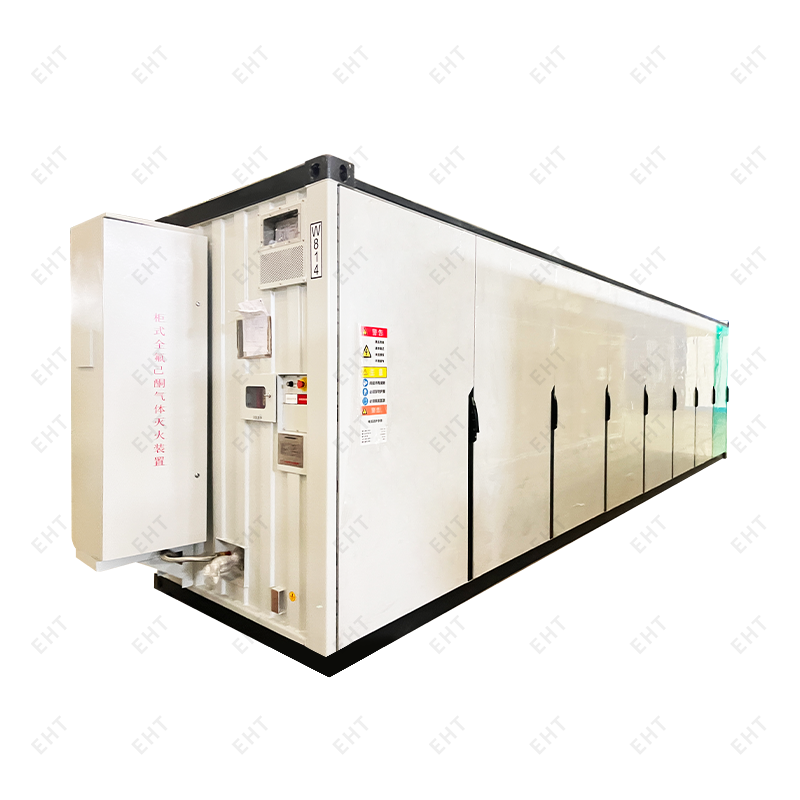 32ft Liquid-Cooled Battery Storage Container with 3.72 MWh Capacity Designed for high-density installations, this liquid-cooled container maintains uniform rack temperatures, reducing capacity imbalance over time. It is widely used in grid-scale projects and aligns with major manufacturers' system designs. View Product →
 Large solar and wind farms often use bigger modules. A 45 ft container with lithium and sodium-ion cells increases project-level capacity while spreading the cost of the container shell over more stored energy. What still matters for lifespan is thermal control and the operating window set by the BMS.
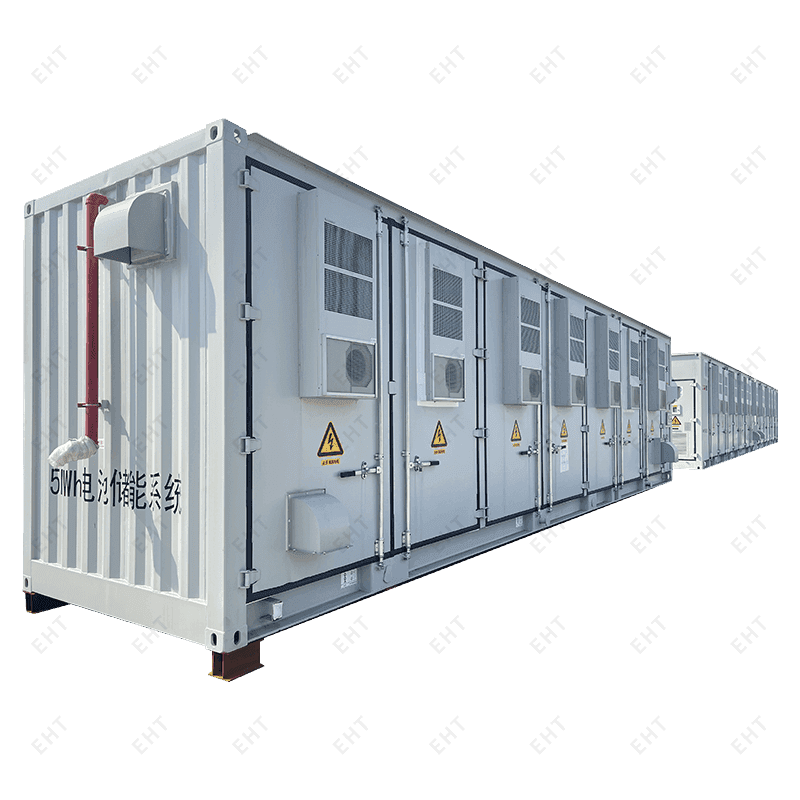 45ft Lithium and Sodium-Ion Energy Storage Container for Large-Scale Projects With options for lithium iron phosphate or sodium-ion cells, this large container increases project capacity while lowering per-unit costs. Air cooling and scalable configurations support power-side and grid-side energy storage needs. View Product →
 Battery life depends as much on the system as on the cells, so procurement should focus on measurable conditions rather than marketing language. Compare suppliers using these points.
Two battery containers can look identical on paper yet age very differently once installed. The checklist separates engineered systems from generic boxes.
How long a lithium battery lasts is not a fixed number; it is a result of the chemistry, the cell quality, the environment, and the operating strategy. For modern containerized energy storage, plan for 10 to 15 years of calendar life and 3,000 to 7,000 cycles at 80% DOD, and protect that potential with proper thermal control and a capable BMS. If you make those factors part of the specification rather than afterthoughts, the delivered battery system can genuinely reach the lifespan shown on the data sheet.

Que rester à jour?
Contactez-nous via l'adresse e-mail ci-dessous.
N ° 178, Wuzhou East Road, zone de développement économique, Yangzhou, Jiangsu.
Copyright 2024 Yangzhou Yichengke Integrated Technology Co., Ltd. All Rights Reserved.

